Tenerife wine: a guide by valley and altitude
Five appellations, a 3,718-metre volcano and vines from sea level to 1,700 metres. A valley-by-valley guide to Tenerife wine and the producers worth knowing.
5 October 2026
In 2015 I took a bottle of Taganan Margalagua 2013, its second vintage, to Dubai so my wife could try it. I’d had it in Tenerife and it had floored me. Nearly a decade later I brought the Margalagua 2023 home, from Envínate, with its 100 Parker points. The score is the least of it. What gets me is what’s behind it: old vines on the slopes of Taganana, in the Anaga massif, where the Margalagua parcel sits between 100 and 250 metres.
It’s an expensive, cult wine, and that bottle went off to sleep in the cellar for a couple of years. But what it left me with wasn’t the price. It was a question: how does one island hold a wine like that and, on the other side of it, whites from vines at 1,300 metres that look nothing like it?
That’s this guide. Tenerife isn’t one wine. It’s a heap of wines arranged around a volcano, and what separates them comes down mostly to one thing: where the vine sits and how high.
A volcano in the middle and the vines all around it
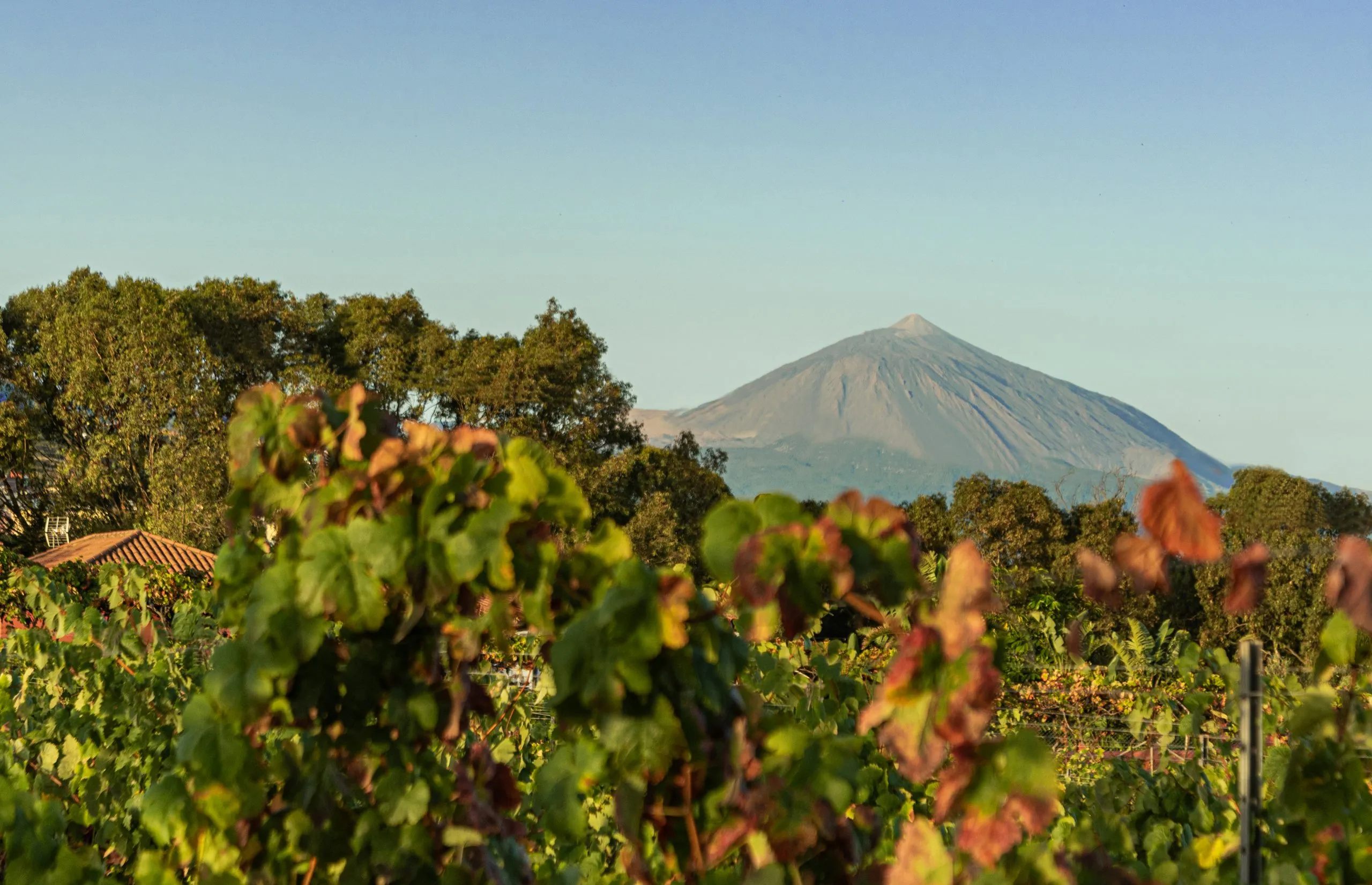
Mount Teide is 3,718 metres tall and splits the island into slopes. The north catches the damp of the trade winds: mist, low cloud, green hillsides. The south gets almost nothing, and there the vines climb higher and higher looking for cool. That’s the first trick to understanding Tenerife: altitude counts for more than distance. Two vines on the same island can sit in climates that have nothing to do with each other.
Underneath, what they all share: soils of ash and lava, vines that for centuries never met phylloxera (mind you, the pest has now reached the island) and a collection of grapes that exist nowhere else, starting with listán blanco and listán negro. Everything else changes from valley to valley. And there are five valleys with their own appellation.
How many appellations does Tenerife have, and how do they differ?
Five: Tacoronte-Acentejo, Valle de La Orotava, Ycoden-Daute-Isora, Valle de Güímar and Abona. They differ above all by slope (north, north-west, south-east or south), by the altitude of the vines and by which grape rules each one. On top of all five sits a sixth label that covers the whole archipelago, DOP Islas Canarias, which we get to below.
One warning before we start. Hectare counts and founding years for each appellation change depending on who you ask, so I’m not going to quote them here. You’ll get altitudes, municipalities and producers, which can be checked.
Tacoronte-Acentejo: the north that opened the road
The first appellation the Canaries ever had, in 1992, and the one closest to the sea: vines between 100 and 1,000 metres, with Atlantic mist and damp. Listán negro rules here, with negramoll for company, and the reds come out fluid, fruity and with an acidity you notice.
The seven that feel most representative to me:
- Bodegas Insulares Tenerife. Born from a 1987 Cabildo plan to give the island regional wineries with proper technology, and founded in 1992. It’s the collective giant: nearly a thousand members across Tacoronte-Acentejo and Ycoden-Daute-Isora. They make the Humboldt range, named after the naturalist who passed through Tenerife in 1799.
- Cráter. In El Sauzal, founded in 1998 by a group of friends who wanted a winery of their own. Vines between 200 and 600 metres, listán negro and negramoll on volcanic soil.
- Viña Estévez. In La Victoria de Acentejo. The family made bulk wine from 1919 and in 2001 stepped up to a new-generation winery.
- Marba. In Tegueste, since 1993. The name comes from the family surnames, Martín Báez.
- Presas Ocampo. On the Los Álamos estate in Tacoronte, at around 300 metres. Domingo López Arvelo began in 1990 to bring back a centuries-old family tradition, with a red of listán negro and negramoll.
- Vinos en Tándem. The project of winemakers Loreto Pancorbo and Gabriel Morales: under two hectares, almost all white, no destemmer or crusher, and a first harvest in 2017 of 1,400 bottles.
- Winery Burgmann. In Tacoronte at 400 metres, with Canadian winemaker Marc Rochefort. Their Olivia is named after Rochefort’s daughter, born during the harvest. The Olivia 2022 we drank on holiday smelled of dry leaves after rain and almonds, and an hour later we could still taste it. Not even the ice cream for pudding wiped it out.
Valle de La Orotava: the braided cord
Here is the oddest thing in world wine. A good part of the valley’s vineyard is trained in cordón trenzado: the vine is stretched into cords several metres long, braided together, a system said to have been brought by the Portuguese five hundred years ago and done nowhere else. The appellation covers La Orotava, Los Realejos and Puerto de la Cruz, the vines are ungrafted, and the traditional grapes are listán blanco and listán negro.
The ones that fit best, to my mind:
- Suertes del Marqués. Jonatan García Lima, a grower in the valley for twenty years before making his first wine in 2006. Vines between 400 and 700 metres. Their La Solana 2021 struck me as a red that starts delicate, with red fruit and flowers, and the moment it opens up it goes wild: pepper, liquorice, smoke, quince paste. A village fiesta, but well integrated. And for what it costs, it lets more people discover the valley. Its little sibling, La Floridita 2024, a bleed-off of Listán Negro halfway between red and rosé, is the Canary red under twenty euros I’ve liked most.
- Arautava. The García family, from Aguamansa and La Perdoma: Américo García founded the winery in 1998 and since 2020 his son Carlos has run it. Finca La Habanera, planted in braided cord, is the jewel of the house.
- La Viñita. A family winery founded in 2018, with a brand that comes from the owner’s childhood nickname, Chivita.
- 300 Líos Volcanic Grapes. In Palo Blanco, in Los Realejos, since 2021. Vines at around 600 metres with albillo criollo, listán blanco and vijariego blanco.
When I asked people who know the valley which wine to take in the bota for the La Orotava romería, all four answers came from this same patch of map: Suertes del Marqués, Tajinaste, Arautava and Chivita. No coincidence.
Ycoden-Daute-Isora: the north-west, from the sea to 1,500
The north-west of the island, nine municipalities from San Juan de la Rambla to Guía de Isora, with vines from 50 up to 1,500 metres on the volcano. A lot of work has gone in here on bringing back almost forgotten grapes: gual, marmajuelo, vijariego, baboso.
- Viñátigo. Founded in 1990 by Juan Jesús Méndez from the century-old vines of the Cabo Verde estate, in La Guancha, and one of those that has done most to rescue varieties that were about to be lost. I drank two vintages of their Xercos, a coastal white at 160 metres, without realising they were different: the 2021, mineral, with the smoke of a put-out match; the 2022, younger and fruitier, a salmorejo-and-paella-in-the-sun kind of wine. Same essence, two wines.
- Envínate. Four friends who met in 2005 studying oenology. Their Migan and Palo Blanco come from hundred-year-old vines in the Valle de La Orotava, and the Taganana Margalagua is the one at the start of this guide. I opened the Migan 2021 on a hot day: red fruit, smoke and that acidity that makes it nice and cool.
- Viña Estrada. At Finca La Calabacera, in Playa San Juan, on the coast of Guía de Isora: the southern tip of the appellation.
Valle de Güímar: the mountain in the south-east
The south-east of the island, three municipalities (Arafo, Candelaria and Güímar) and vines from 150 up to 1,500 metres. More white than red (around 65% white), led by ungrafted listán blanco, in old vines that give next to nothing.
- Juan Francisco Fariña. In Arafo, with vines between 750 and 800 metres and wine bottled under the appellation since 1999. His labels are El Borujo and Los Loros. From Los Loros there’s La Bota de Mateo, a Güímar listán blanco that comes out talking Andalusian.
- Hermanos Mesa. In Arafo. Mostly white, with vines from sea level to 1,300 metres and ancestral-method sparkling wines.
- Ferrera (Arafo) and El Rebusco (Candelaria). Both are on my to-do list and I won’t tell you about what I haven’t drunk.
And much higher up, at 1,400 metres, the listán blanco of Lorelay Toto: three months on skins and 386 numbered bottles. That’s Güímar too.
Abona: the highest vines in Spain
Abona, in the south, is the part of the island where the vine really climbs: between 200 and 1,800 metres, with subtropical heat on the coast and frost and snow on the summits. Vilaflor, one of its municipalities, is the highest in the Canaries.
- Reverón. In Vilaflor, at around 1,300 metres. Founded in 1947 by Eugenio Reverón, and since 2004 it has farmed 12 of its 17 hectares organically, with albillo criollo and malvasía, among others.
- Altos de Trevejos. In Los Llanos de Trevejos, also at 1,300 metres, founded in 2012. They farm 23 hectares on trellis and manage around fifteen more of old bush vines.
- Cumbres de Abona. A cooperative born in 1988, in Arico, with more than 700 growers and vineyards between 300 and 1,700 metres. It sits under two labels: Abona and DOP Islas Canarias.
From this zone we have no tasting of our own to tell you about yet. All three wineries are on the Club’s list, and they’ll be added in time.
What is DOP Islas Canarias, or “Canary Wine”?
It’s the protected designation of origin covering the whole archipelago, and the one you see more and more on labels of Tenerife wines: around fifty wineries and more than eight hundred registered growers. It works as an umbrella: some Güímar wines, for example, come out under DOP Islas Canarias rather than under the valley’s own DO. Same vineyard, different stamp. It doesn’t mean the wine is worse.
Where to start: one wine per valley
If you had to try five bottles from Tenerife to understand the island, start with these, all from producers I’ve actually drunk:
- Tacoronte-Acentejo: Burgmann’s Olivia. A white with character, to see that the north can do white too.
- Valle de La Orotava: La Solana, from Suertes del Marqués. The red with which most people discover the valley.
- Ycoden-Daute-Isora: a white from Viñátigo. The coast, with a touch of smoke.
- Valle de Güímar: La Bota de Mateo, from Los Loros.
- Margalagua: if the budget allows, the wine that opens this guide. And when you buy it, do what I do: buy it from whoever sells it at a fair price.
For Abona, for now, you’re on your own. I promise to catch up.
And if you want the map of the whole archipelago before diving into Tenerife, it’s in where to start with Canary Islands wine. The pages for Tenerife, Valle de La Orotava and Valle de Güímar have the rest.
One island, five valleys and a volcano that hands it all out. Wine tastes of where it’s born, and here it’s born at a lot of different heights.
Pre-phylloxera wines of the Canary Islands: what they are and why they matter more now
Ungrafted vines that phylloxera left alone for 150 years, until it reached Tenerife in 2025. What pre-phylloxera Canary wine is, and why it matters.
Canary Islands wine: where to start without getting lost
Volcanic soil, grapes that exist nowhere else and a ladder that starts in a guachinche. How to get into Canary Islands wine without drowning in eleven appellations.
San Andrés in Tenerife: new wine, chestnuts and rattling cans
On the night of 29 November, northern Tenerife opens its cellars, tastes the new wine and drags cans through the streets. What San Andrés is and how to join in.