Domaine Joubert Bourgogne Blanc 2021: the Beaujolais Chardonnay that takes its sweet time
A Bourgogne Blanc bottled deep in Beaujolais: natural Chardonnay from the Joubert family, with an almost oily texture, butter and a just-baked baguette.
A few days back we went to L’Excellence Les Sens du Vin’s tasting at Vinófilos, in Santa Cruz. Every single wine was spot on (honestly, not a dud in the line-up), but one stuck with me from the very first sip: Domaine Joubert’s Bourgogne Blanc 2021.
So much so that I walked out with the bottle tucked under my arm.
A Bourgogne bottled in Beaujolais
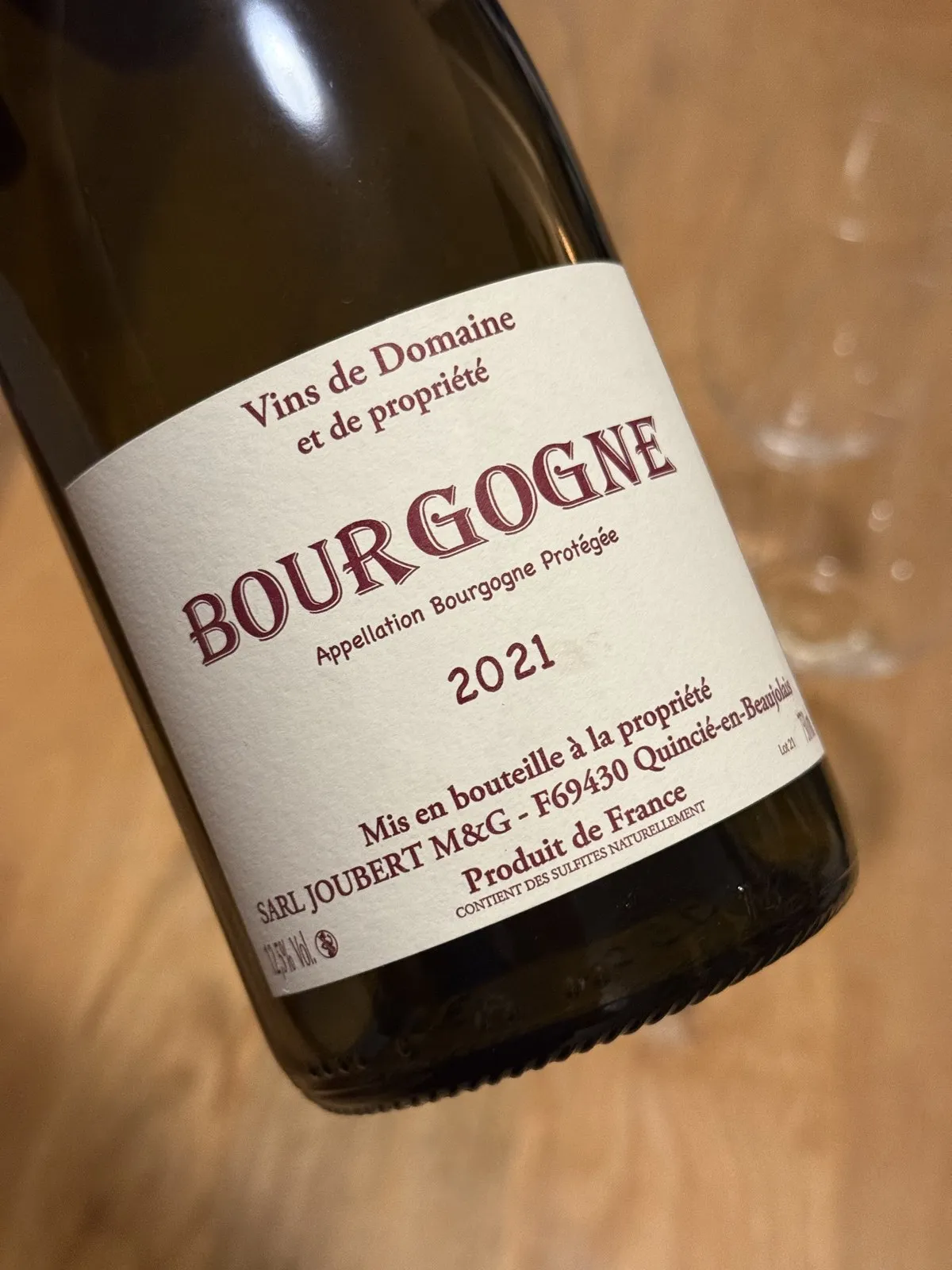
The first thing that tickled me is right there on the label. It says BOURGOGNE in huge letters, but down at the bottom, in the small print, it tells you where it was bottled: Quincié-en-Beaujolais. In other words, this isn’t picture-postcard Burgundy. It’s a bit further south, in Gamay country.
There’s a reason for it. Part of Beaujolais (the crus and a handful of other villages) is entitled to the Bourgogne appellation, so the Chardonnay grown there can go out into the world as Bourgogne Blanc. Which makes this a Burgundy Chardonnay on paper and a Beaujolais wine by birth.
Behind it is the Joubert family, in Quincié, at the foot of Mont Brouilly. Marcel, the fourth generation, took over in 1972 and went organic from day one (certified since 2012), heading down the natural wine road in the spirit of Jules Chauvet and Georges Descombes, who are no small names round those parts. These days his daughter Carine runs the show. Around ten hectares, some plots with vines over a hundred years old, and next to no chemicals.
I’ll own up: I couldn’t find a tech sheet for this particular Bourgogne. The one for its sibling, the house Beaujolais Blanc, says the Chardonnay is hand-picked, pressed and sent straight into large foudres, fermented on its own yeasts and aged on the lees, with no added sulphur, no filtering and no fining. This label drops a hint too: “contient des sulfites naturellement”. Whatever sulphites are in there, the wine made them all by itself.
Tasting notes: texture calls the shots
It’s exactly the kind of white I keep reaching for lately: a few years under its belt and proper body. Mind you, 2021 was a cool, tricky year round there, with that April frost that wiped out half the crop. You can see it in the alcohol, a very restrained 12.5%. You can’t taste it, though, because this wine’s heart is in the texture.
The white fruit is there, I’m not saying it isn’t. But texture is what calls the shots: almost oily, lingering in the mouth with no hurry at all, like someone turning up for a long Sunday lunch and settling in without a glance at the clock.
Then there’s the nose, which is pure weekend breakfast: butter and a just-baked baguette, the kind that still crackles. That bakery doesn’t come from the grape; it comes from months on the lees. Underneath, an earthy little note keeps its feet on the ground and stops it getting too indulgent. Five years in bottle have done it the world of good.
What to drink it with?
Something with a bit of fat and a bit of substance: a roast chicken, white fish in a butter sauce, pan-fried mushrooms or a soft-rind cheese. The wine’s texture stands up to whatever you throw at it, and that earthy streak gets on famously with anything from the woods.
That said, at home it never got the chance to find a match.
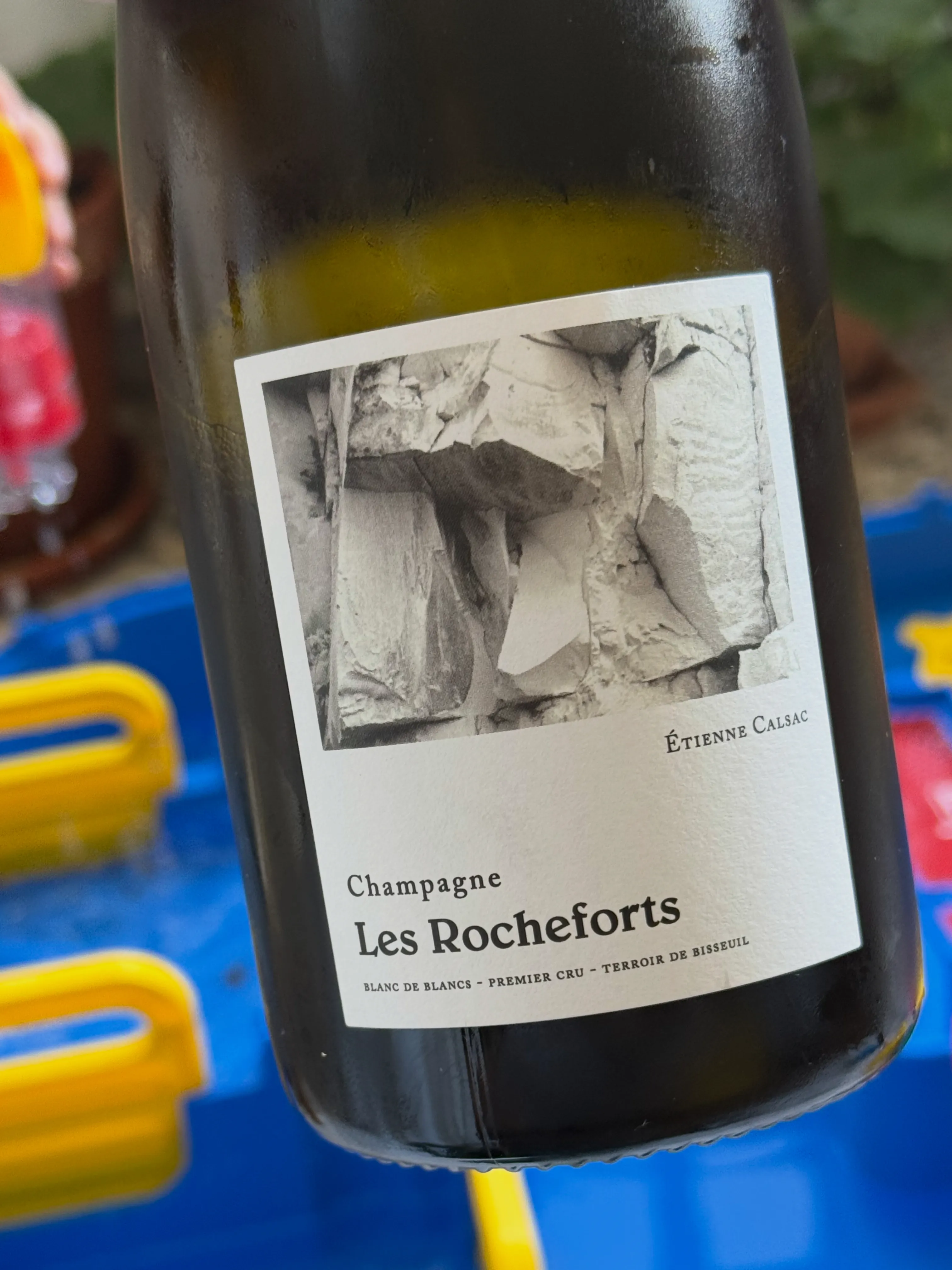
If you like your Chardonnay sharper, Étienne Calsac’s Les Rocheforts is the same grape on chalk, in knife-edge mode. And if you’re after another white with age and heft, CVNE’s Monopole Blanco Seco Reserva plays in the same league from Rioja.
I left with one bottle. Should’ve made it two.
Didn't last long at home.